



 0
 0
Table of Contents
- How Are Veneers and Crowns Different?
- Start With the Tooth’s Health
- When Might a Porcelain Veneer Make Sense?
- When Might a Crown Be More Appropriate?
- Does a Root Canal Automatically Mean You Need a Crown?
- Could Bonding or Whitening Be Enough?
- How Much Tooth Preparation Is Involved?
- Which Option Will Look More Natural?
- What Should You Consider About Maintenance and Cost?
- Choose According to What the Tooth Needs
- Frequently Asked Questions
A chipped, discolored, or uneven front tooth can make you more conscious of your smile. When researching treatment, you may discover that both porcelain veneers and dental crowns can improve its appearance. That overlap can make the choice confusing.
A porcelain veneer generally suits a largely healthy tooth that needs a cosmetic change, while a crown may be appropriate when substantial damage calls for broader coverage and support. The right choice depends on the tooth’s condition, remaining structure, and bite—not appearance alone.
Understanding these differences can help you discuss treatment without assuming that either option is automatically better.
How Are Veneers and Crowns Different?
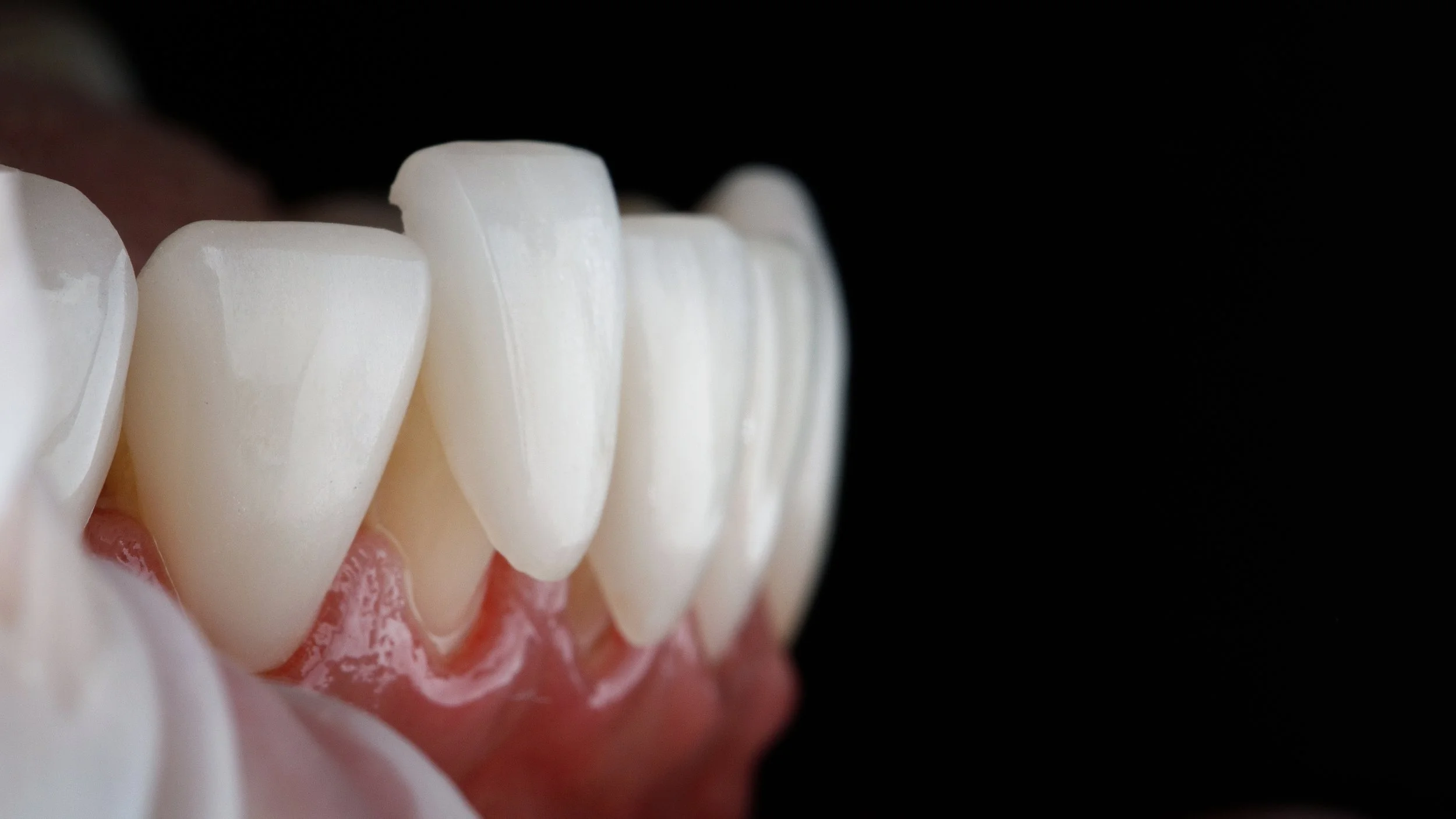
A porcelain veneer is a thin, custom-made shell bonded primarily to the front surface of a tooth. It can change the visible shape, color, or proportions while leaving more of the tooth uncovered.
A crown fits over the prepared tooth, covering its visible portion above the gumline. It can restore the shape and function of a tooth that has been weakened or damaged.
When considering porcelain veneers in Agoura Hills, ask whether your concern involves appearance, structural damage, or both. This distinction helps guide the recommendation.
The American Dental Association explains that veneers cover the front surface, whereas crowns provide more extensive coverage. Both require careful assessment before treatment.
| Consideration | Porcelain veneer | Dental crown |
| Coverage | Primarily the front surface | Surrounds the prepared tooth above the gumline |
| Typical purpose | Improve appearance on a suitable tooth | Restore and protect a damaged or weakened tooth |
| Preparation | Usually removes less tooth structure | Usually requires more extensive reshaping |
| Main planning question | Is there sufficient suitable tooth structure for bonding? | Does the tooth need broader coverage and support? |
The comparison is a starting point. An examination determines what is appropriate for an individual tooth.
Start With the Tooth’s Health
Before choosing a restoration, the dentist needs to understand why the tooth looks or feels different.
A small chip from an isolated accident presents a different situation from repeated fractures, extensive decay, or a large failing filling. Discoloration may also require investigation, particularly if it followed an injury.
An assessment with a dentist in Agoura Hills should consider the tooth, surrounding gums, existing restorations, and how your teeth meet. X-rays or other tests may be recommended according to the findings.
Existing decay needs treatment before cosmetic work proceeds. NIDCR explains that cavities involve damaged tooth structure that may require removal and restoration. Covering the visible concern does not address the underlying disease.
When Might a Porcelain Veneer Make Sense?
A veneer may be considered when the tooth remains largely healthy and the desired change concerns its visible surface.
Examples include selected cases involving:
- A small chip or uneven edge.
- Discoloration that does not respond adequately to whitening.
- An unwanted tooth shape or proportion.
- A minor cosmetic gap.
Suitability also depends on the enamel available for bonding, the extent of existing restorations, and the forces acting on the tooth.
The ADA notes that veneers may be unsuitable for some people who grind or clench their teeth or have a deep overbite. These findings should be discussed before treatment rather than addressed only after a restoration breaks.
For someone exploring veneers in Agoura Hills, preserving healthy tooth structure should remain part of the conversation alongside shade and appearance.
When Might a Crown Be More Appropriate?
A crown may be considered when a tooth has lost enough structure that a veneer would not provide suitable restoration.
Possible reasons include a substantial fracture, extensive decay, or a large restoration that leaves the remaining tooth vulnerable. A crown can restore shape and provide coverage around the prepared tooth.
However, a crown is not automatically the best choice because it covers more surface area. The dentist should explain what requires protection and why a less extensive restoration would be insufficient.
The ADA identifies protecting a weak tooth, restoring a broken tooth, and supporting a tooth with a large filling among common reasons for crown treatment.
Ask to see the findings that support the recommendation.
Does a Root Canal Automatically Mean You Need a Crown?
No. A front tooth that has undergone root canal treatment does not always require a crown.
The amount and condition of remaining tooth structure are important. A tooth with limited damage may have different restorative needs from one with extensive decay, a large fracture, or multiple existing restorations.
The American Association of Endodontists explains that front teeth may not always need crowns after root canal treatment. The final restoration depends on the individual tooth.
If a root-treated front tooth has changed color, discuss both its health and appearance. Ask whether a filling, whitening approach, veneer, or crown is appropriate, and what each option would require.
Could Bonding or Whitening Be Enough?
Sometimes, neither a veneer nor a crown is the most appropriate first step.
Composite bonding may be considered for a limited chip or shape adjustment. Whitening may help when the main concern is natural tooth color and the tooth is otherwise suitable.
These alternatives have their own limitations. Whitening does not change the color of existing veneers, crowns, or fillings, so treatment planning must account for any restorations already present.
Ask whether a smaller intervention could meet your goals. Discuss the expected appearance, maintenance, and possibility of future repair rather than comparing treatments only by their initial cost. The ADA describes bonding, whitening, veneers, and crowns as different approaches to improving a smile.
How Much Tooth Preparation Is Involved?
Traditional porcelain veneers usually require enamel removal to create space and establish the planned shape. Crowns generally require reshaping around more of the tooth.
The amount varies with the tooth’s condition, restoration material, and treatment design. A fixed preparation measurement cannot describe every case.
Because removed tooth structure does not grow back, understand the proposed changes before proceeding. Crown preparation may also involve rebuilding missing areas so the restoration has an appropriate foundation.
Useful questions include: How much healthy structure will be removed? What alternatives preserve more? What future treatment might be needed?
Which Option Will Look More Natural?
Both porcelain veneers and tooth-colored crowns can be designed to blend with surrounding teeth. Neither guarantees a better cosmetic result in every situation.
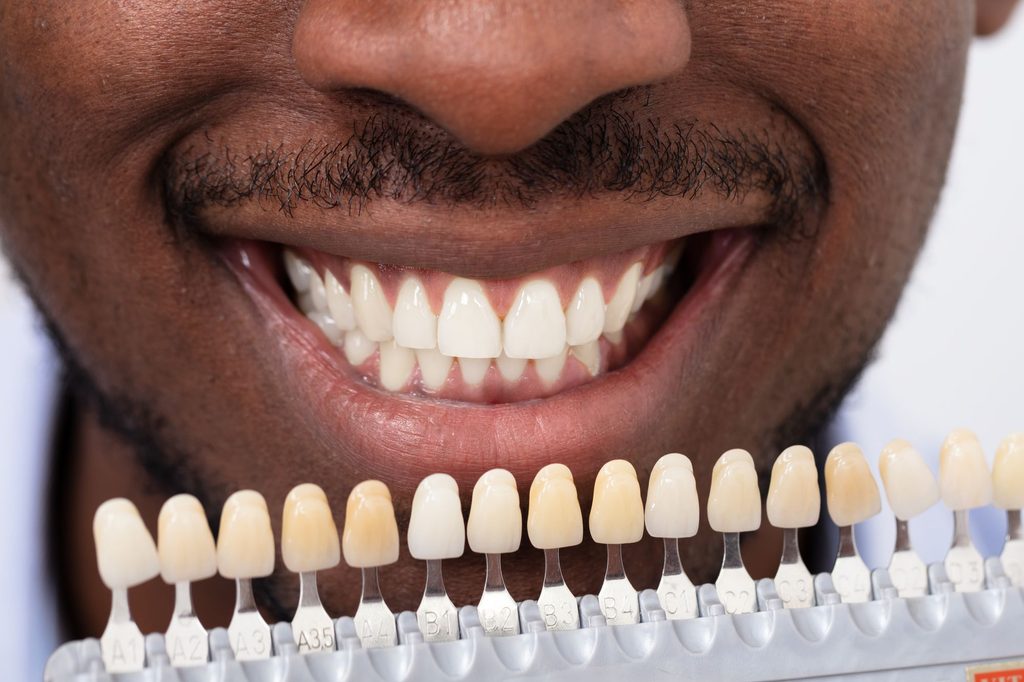
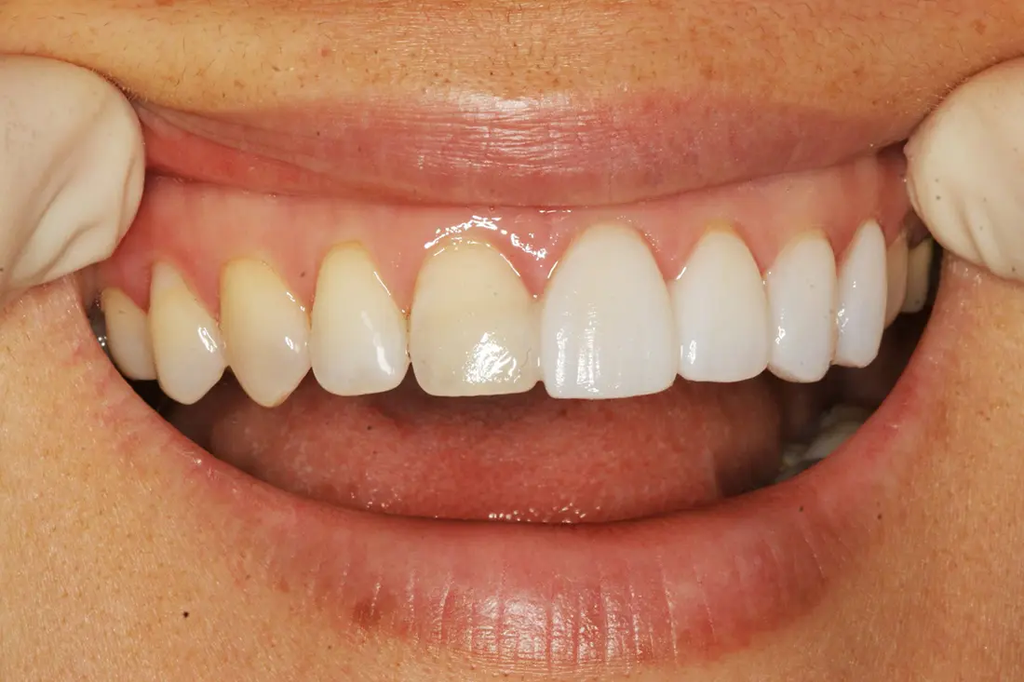
Matching one front tooth can require careful attention to shade, translucency, shape, and surface detail. The underlying tooth color and available space also affect planning.
When comparing porcelain veneers near you, ask how the dentist will evaluate the proposed appearance before final placement. Discuss your preferences clearly, including whether you want to match neighboring teeth or pursue a broader color change.
Agoura Advanced Dentistry offers porcelain veneer treatment. A consultation can establish whether that service suits the tooth’s condition and your cosmetic goals.
What Should You Consider About Maintenance and Cost?
Both restorations need daily cleaning and regular dental reviews. The natural tooth can still develop decay, and restorations can chip, loosen, or require replacement.
Neither should be presented as a lifetime guarantee. Your bite, oral hygiene, remaining tooth structure, and habits affect long-term outcomes.
Request an estimate that identifies the restoration, preparatory treatment, temporary restoration if needed, and follow-up care. Confirm insurance benefits directly rather than assuming a crown will be covered or a veneer will be excluded.
Choose According to What the Tooth Needs
A veneer can be appropriate for a cosmetic concern on a suitable tooth. A crown may make sense when damage requires broader restoration. Sometimes bonding, whitening, or another approach offers a better fit.
Frequently Asked Questions
Is a veneer better than a crown for a front tooth?
Neither is universally better. The choice depends on the remaining tooth structure, damage, bite, and desired change.
Does a chipped front tooth always need a crown?
No. A limited chip may be treated with bonding or, in suitable cases, a veneer. More substantial damage needs a different assessment.
Can a veneer replace an existing crown?
Generally, a veneer cannot substitute for the full coverage required by an already prepared crowned tooth. A replacement crown may be considered instead.
Will whitening lighten a veneer or crown?
No. Whitening affects natural teeth rather than the color of existing restorations.
Does every front tooth with a root canal need a crown?
No. The decision depends partly on how much healthy structure remains and what protection the tooth requires.
Can decay develop around either restoration?
Yes. Both depend on natural tooth structure that remains vulnerable to decay, so cleaning and dental examinations remain important.

Unsure whether your front tooth needs a veneer or crown? Book a consultation with Agoura Advanced Dentistry to review the tooth’s health, compare suitable options, and discuss your smile goals.


